


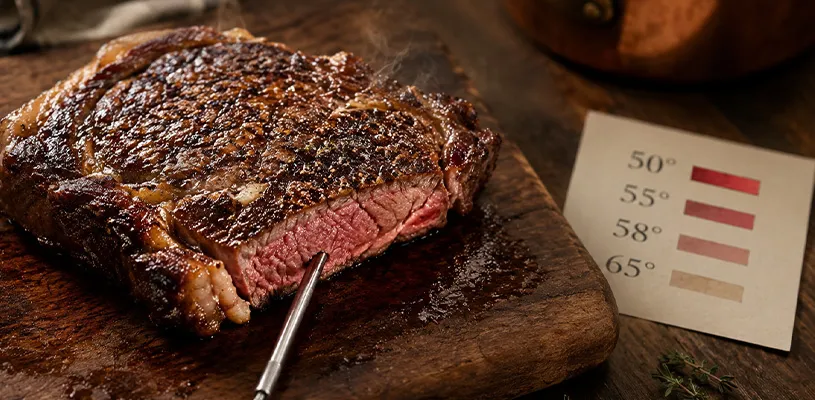
Getting meat just right isn’t really about minutes in the pan or how long something has been on the grill. It’s about temperature. A good meat thermometer makes a bigger difference than most seasonings in the kitchen - especially when you start cooking larger cuts, grill more often, or want the same result every time.
Here, we go through the right internal temperature for steak, pork, chicken, fish, and poultry. We also look at doneness, resting time, and why meat actually keeps cooking even after you’ve taken it off the heat.
Complete table - internal temperature for meat
|
Ingredient |
Rare |
Medium rare |
Medium |
Well done |
|
Beef tenderloin / ribeye |
50-52°C |
54-56°C |
58-60°C |
65°C+ |
|
Striploin |
50-52°C |
54-56°C |
58-60°C |
65°C+ |
|
Pork tenderloin |
- |
- |
63-68°C |
70°C |
|
Pork shoulder |
- |
- |
75-85°C |
- |
|
Chicken breast |
- |
- |
70-72°C |
75°C |
|
Whole chicken |
- |
- |
72-75°C |
- |
|
Lamb |
52-54°C |
55-57°C |
60-65°C |
70°C |
|
Duck |
56-60°C |
60-63°C |
65°C |
- |
|
Salmon |
42-48°C |
50°C |
52-55°C |
- |
|
White fish |
- |
- |
52-58°C |
- |
Why internal temperature matters more than time
Many recipes still say things like “cook for four minutes per side.” The problem is that meat is never exactly the same thickness, never equally cold, and never cooked at exactly the same heat.
A thin ribeye straight from the fridge behaves completely differently from a thick cut that has sat out at room temperature. That’s why internal temperature is the only truly reliable way to know when food is done. This matters especially on the grill, where heat can vary widely depending on the charcoal, wind, and lid temperature.
Internal temperature for steak and doneness
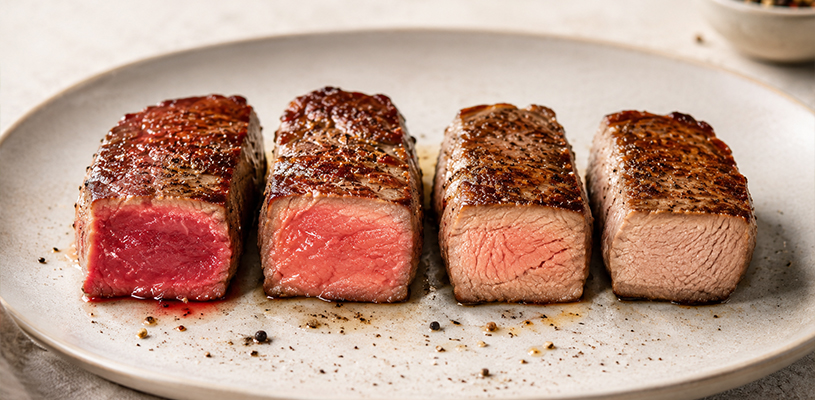
When people talk about rare, medium, or well done, they’re really just talking about different temperature ranges.
- Rare - about 50-52°C
- Medium rare - about 54-56°C
- Medium - about 58-60°C
- Well done - 65°C and up
Most meat lovers tend to land around medium rare to medium for ribeye and beef tenderloin. That still gives you juicy meat with a good sear, without drying it out.
A common mistake is waiting too long before taking the meat off the heat. The temperature keeps rising afterward.
What is carry-over cooking?
Carry-over cooking means the meat keeps cooking from its own heat after it leaves the grill or pan. A larger cut can often rise by 3 to 8 degrees during resting time. If you’re aiming for 58°C, you may want to take the meat off at 54-55°C instead.
The larger the cut, the more noticeable the effect. A thin hamburger is affected only a little, while a whole beef tenderloin can keep rising for quite a while. That’s also why many restaurants manage such consistent results.
Don’t forget the resting time
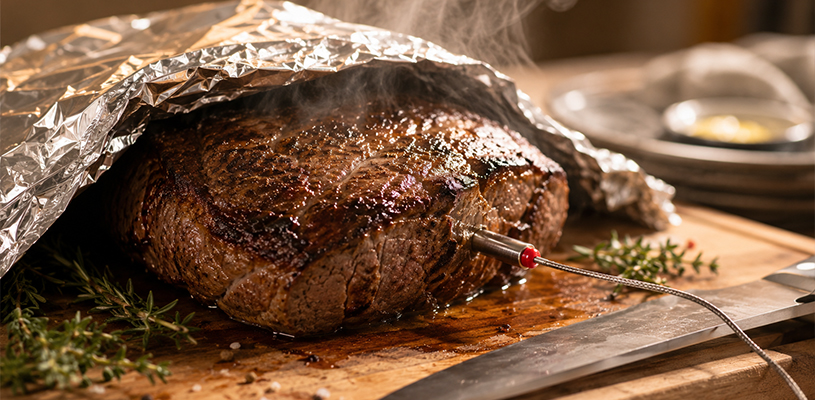
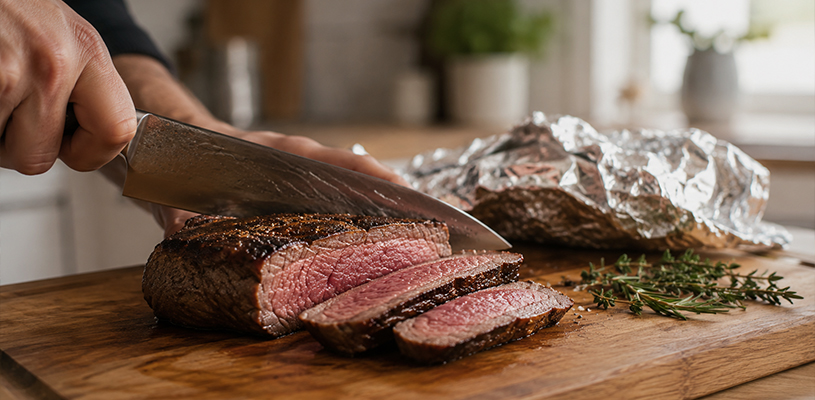
Resting time is just as important as the cooking itself. As meat cooks, the juices are pushed toward the center. If you cut it right away, a lot of the juice runs onto the plate instead. Letting the meat rest for a few minutes gives the juices time to redistribute more evenly.
A good rule of thumb:
- Steaks - 5 to 10 minutes
- Larger roasts - 10 to 20 minutes
- Whole chicken - about 15 minutes
Cover it loosely with foil if you like, but not too tightly. Otherwise, the crust can soften.
Internal temperature for chicken and pork
Chicken is the ingredient where temperature really matters most for safety. This is not where you want to guess. Chicken breast is usually perfect at around 70-72°C. Many people cook it far too long “just to be safe,” which often makes it dry.
Pork has also changed over the years. In the past, very high temperatures were recommended, but today it’s fine to eat pork tenderloin at around 65°C as long as the meat has been handled properly. Pork shoulder and pulled pork, however, are different methods of cooking, where you often want to go higher to break down fat and connective tissue.
Fish needs a lower temperature than many people think
Fish dries out quickly if the temperature climbs too high. Salmon, in particular, is delicate. Many people enjoy salmon at around 48-50°C, where the center is still slightly glossy and very juicy. If you go up toward 60°C, it becomes much firmer and drier. White fish such as cod and pollock usually works best at around 52-58°C, depending on thickness. If you’ve ever wondered why restaurant salmon feels softer than the kind you make at home, it’s almost always the temperature.
Thermometer placement matters a lot
A thermometer only helps if it’s placed correctly.
The probe should always go into the thickest part of the meat without touching bone or the pan. If the tip sits too close to the surface, you’ll often get readings that are too high. On thinner cuts, it can be better to insert the thermometer from the side rather than from above. Wireless thermometers also mean you don’t have to keep opening the grill lid and losing heat.
Summary
Once you start cooking by temperature instead of time, it’s hard to go back. The result is more even, juicier, and much easier to get right - whether it’s a quick weeknight dinner or a bigger grill night.
The most important things are actually quite simple:
- Take the meat off a little earlier than you think
- Let it rest properly
- Use a good thermometer
The rest is mostly about finding your own favorite temperatures.
FAQ
What internal temperature should steak have?
Medium rare is normally around 54-56°C, while medium is usually about 58-60°C.
What temperature should chicken be?
Chicken breast should reach at least 70°C in the thickest part.
How long should meat rest?
Smaller steaks about 5-10 minutes, and larger roasts up to 20 minutes.
What does carry-over cooking mean?
It means the meat continues to rise in temperature even after it has been removed from the heat.
Can you use the same temperature for the grill and the pan?
Yes. The internal temperature is the same regardless of cooking method.