



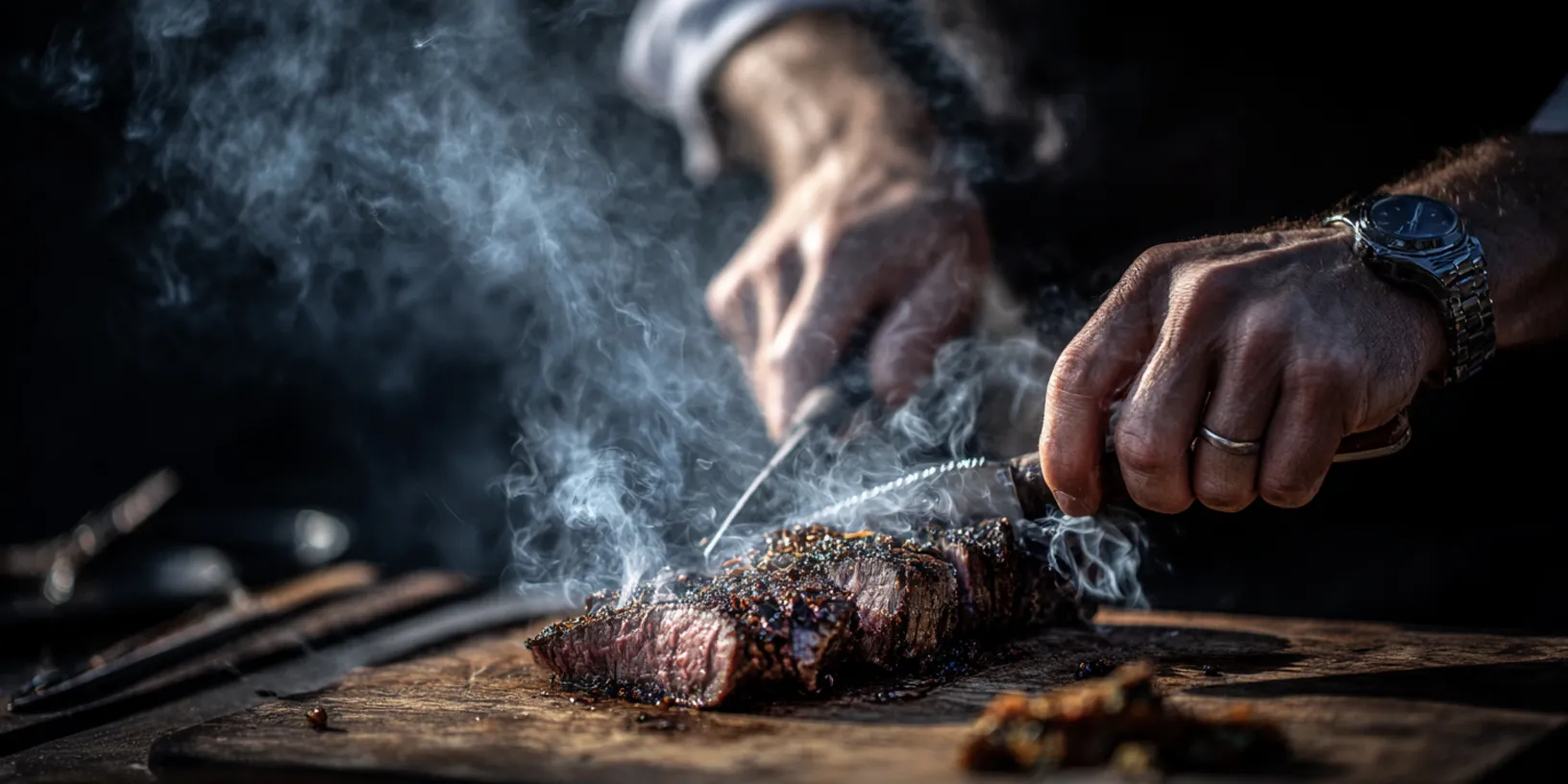
Achieving a great result on the grill is not reserved for the most expensive and premium cuts of meat. On the contrary, true grilling skill lies in refining simpler, more budget-friendly cuts into juicy, tender, and flavorful delicacies. The secret is knowledge, technique, and above all, precision. Forget the myth that only tenderloin will do; with the right touch, both pork shoulder and flank steak can rule over the coals.
Perhaps the most rewarding and best-value cuts for the grill are pork shoulder, flank steak, and chicken thigh fillet. Pork shoulder, with its generous marbling of fat, becomes incredibly juicy and flavorful when cooked properly. Flank steak is a leaner but very flavorful cut that, when handled correctly, offers a wonderful texture. Chicken thigh fillet, in turn, is a superior alternative to the often dry chicken breast fillet, thanks to its higher fat content, which makes it much more forgiving on the grill grate. The challenge with these cuts is the connective tissue and muscle fibers, which require care to break down and become tender rather than chewy.
Here, temperature control is absolutely crucial. Relying on the clock is a gamble, while measuring the internal temperature is a science that ensures a successful result. A tough pork shoulder has almost always been cooked too quickly over too high heat, which means the fat and connective tissue do not have time to melt and break down. To achieve that melt-in-your-mouth tenderness, you need lower heat for a longer time, known as indirect grilling. With a wireless meat thermometer, you get complete control right on your phone and can follow the meat's temperature development in real time. Simply place the thermometer in the thickest part of the meat, then sit back and let the grill do the work. When the pork shoulder reaches an internal temperature of around 70°C, it is done and cooked through, but for a truly tender result, you can let it go even longer. Flank steak, on the other hand, is best when quickly grilled to an internal temperature of about 56-58°C for a medium-rare result.
The preparation and the final step are just as important as the grilling itself. A good rub or marinade does wonders for flavor development, but remember to pat the meat dry before placing it on the grill to achieve a nice surface. Once the meat has reached its target temperature, it is absolutely essential to let it rest for at least ten minutes before cutting into it. During the resting period, the meat juices are redistributed evenly throughout the cut, which makes all the difference between a dry and a juicy result. When it is finally time to carve, a sharp knife is not a luxury but a necessity for preserving the meat's structure. For cuts like flank steak, it is also critical to slice against the grain; this shortens the fibers and makes each bite much more tender. With the right technique and reliable tools, you can serve barbecue with confidence that impresses, without it costing a fortune.
Frequently asked questions and answers
What is the most important tool for succeeding with cheaper cuts of meat on the grill?
The single most important tool is a reliable meat thermometer. Since these cuts often require precise temperature control to break down connective tissue and become tender, it is nearly impossible to succeed consistently by time alone. A wireless meat thermometer gives you precision and control throughout the entire process.
Why is it so important to let the meat rest after grilling?
When meat is cooked, the muscle fibers contract and push the meat juices toward the surface. If you cut into the meat right away, all that juice runs out onto the cutting board. By letting the meat rest, the fibers have time to relax and reabsorb the juices, resulting in much juicier, more flavorful meat.
What does it mean to cut meat against the grain, and why do you do it?
Cutting against the grain, or across the muscle fibers, means slicing at a 90-degree angle to the direction in which the meat's muscle fibers run. This shortens the tough fibers into small pieces, making the meat much easier to chew and noticeably more tender. This is especially important for cuts like flank steak.
Can I grill these cuts over high, direct heat?
It depends on the technique. For a thicker piece of pork shoulder, it is best to first use low, indirect heat to slowly reach the right internal temperature and then finish with high, direct heat to get a good grilled surface. For a thinner cut like flank steak, high direct heat for a short time works very well, a so-called hot grill, to quickly add color without overcooking the inside.